6th, 7th, and 8th Grade Science “Nuclear Fuel Cycle”
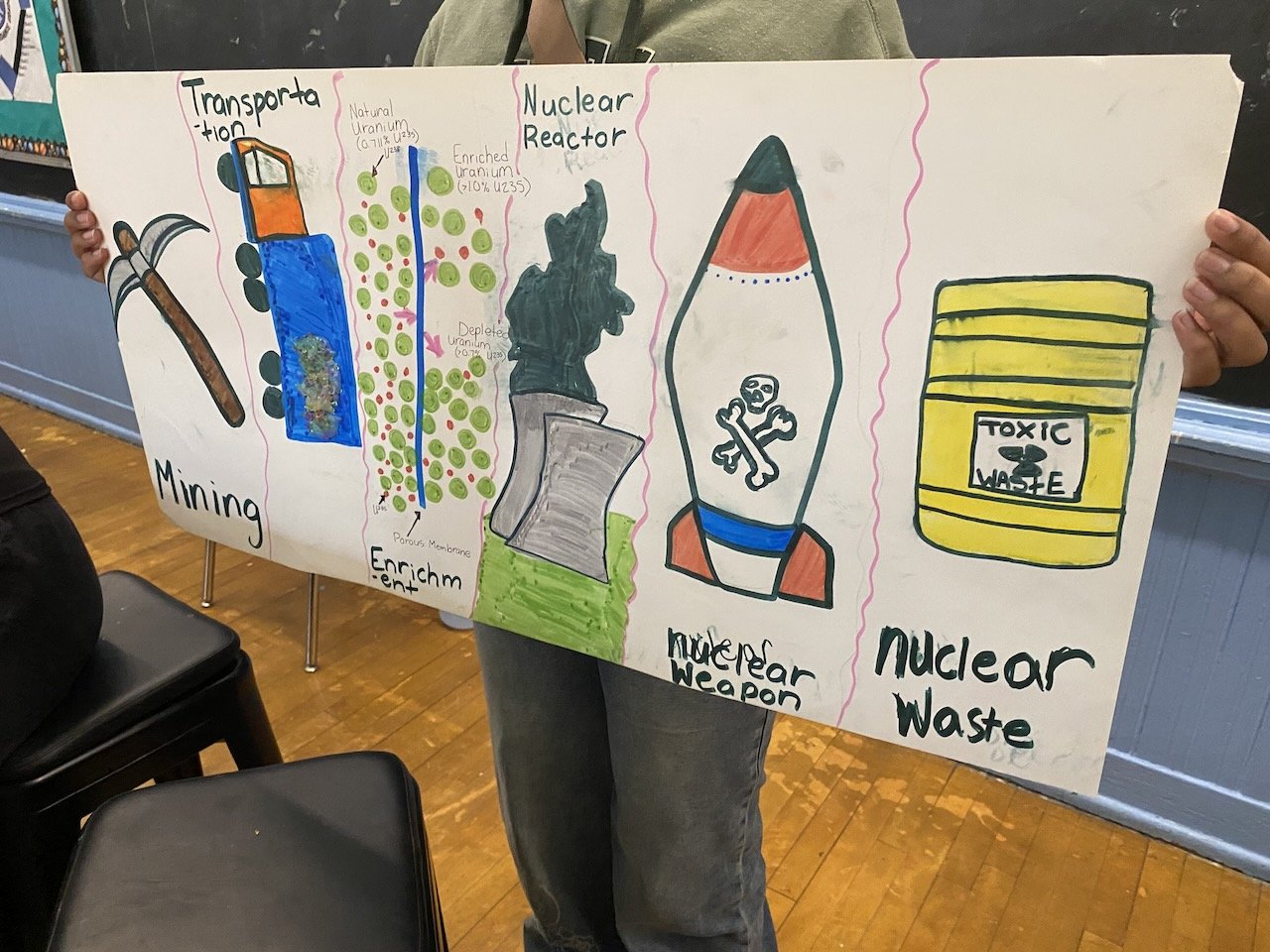
Objective: Students will develop their own models of the uranium cycle that is necessary for producing nuclear energy. The models will include the scientific process as well as the impact on living things and human society.
1: Contextualizing Students’ Understanding of the Problem
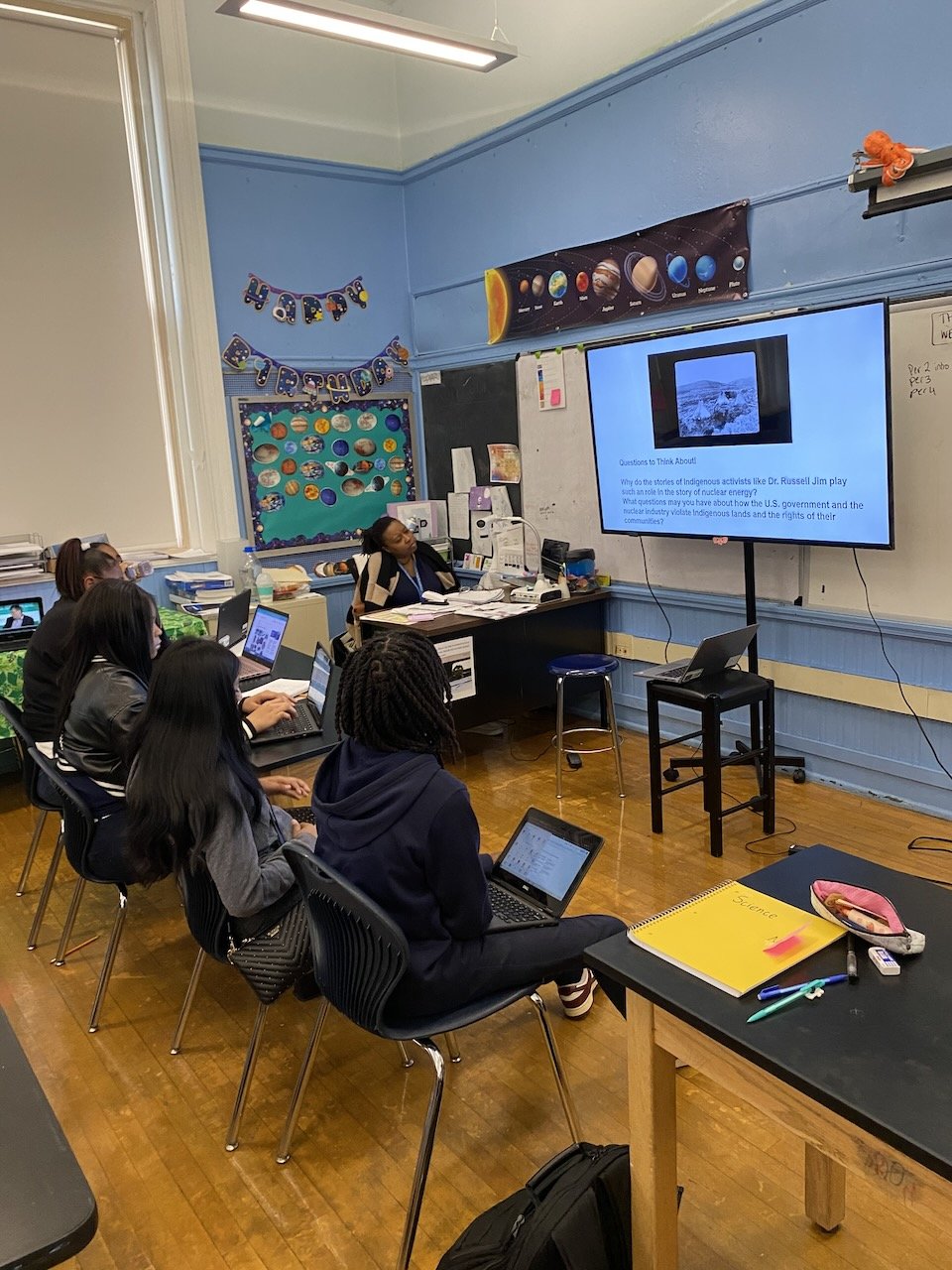
Students were introduced to the environmental justice perspective, with real cases in Southside Chicago, which they are familiar with. Also, students were able to interview Jan Haaken, the director of Atomic Bamboozle, and learned the struggle and activism by indigenous people impacted by the nuclear fuel cycle, namely, the whole process of nuclear energy production, energy generation and management, and back end waste management.
Atomic Bamboozle/Small Modular Nuclear Reactors Notecatcher
Atomic Bamboozle Filmmaker Talk Response Sheet
2: Uranium Cycle Game
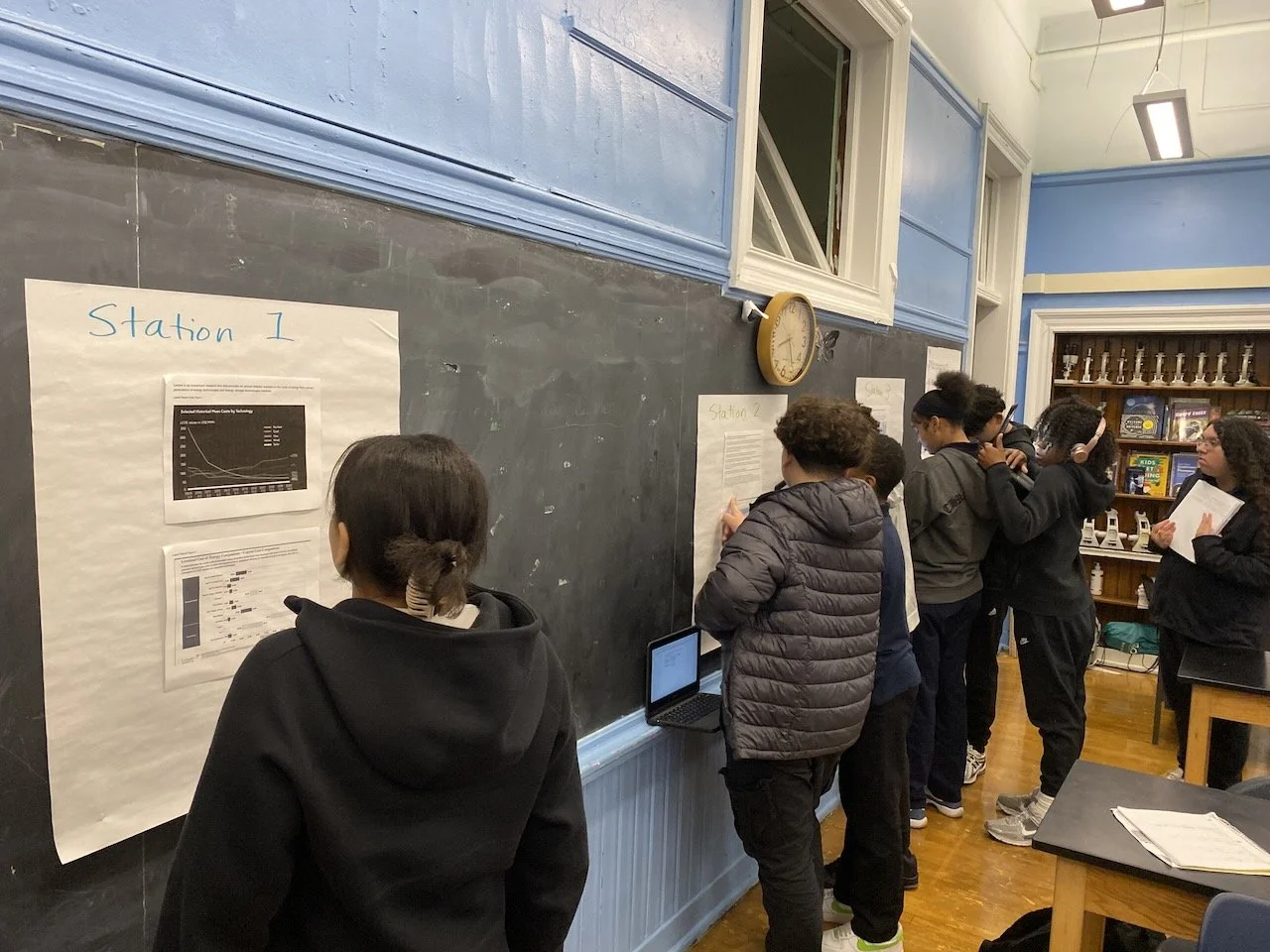
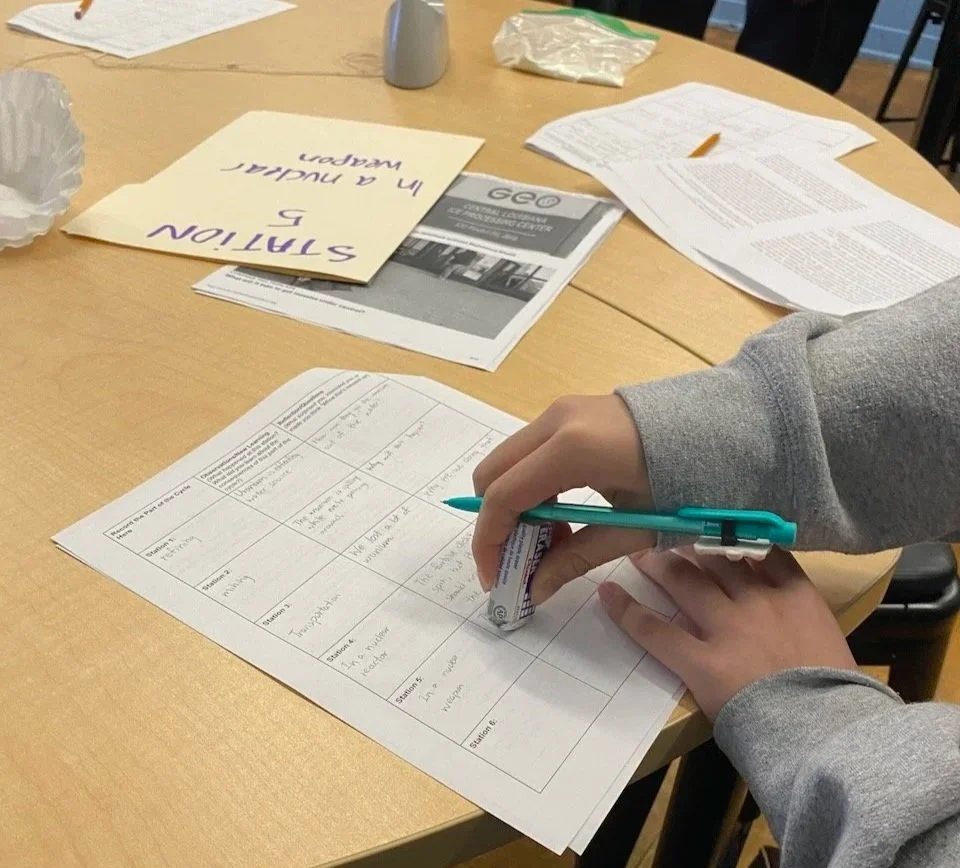
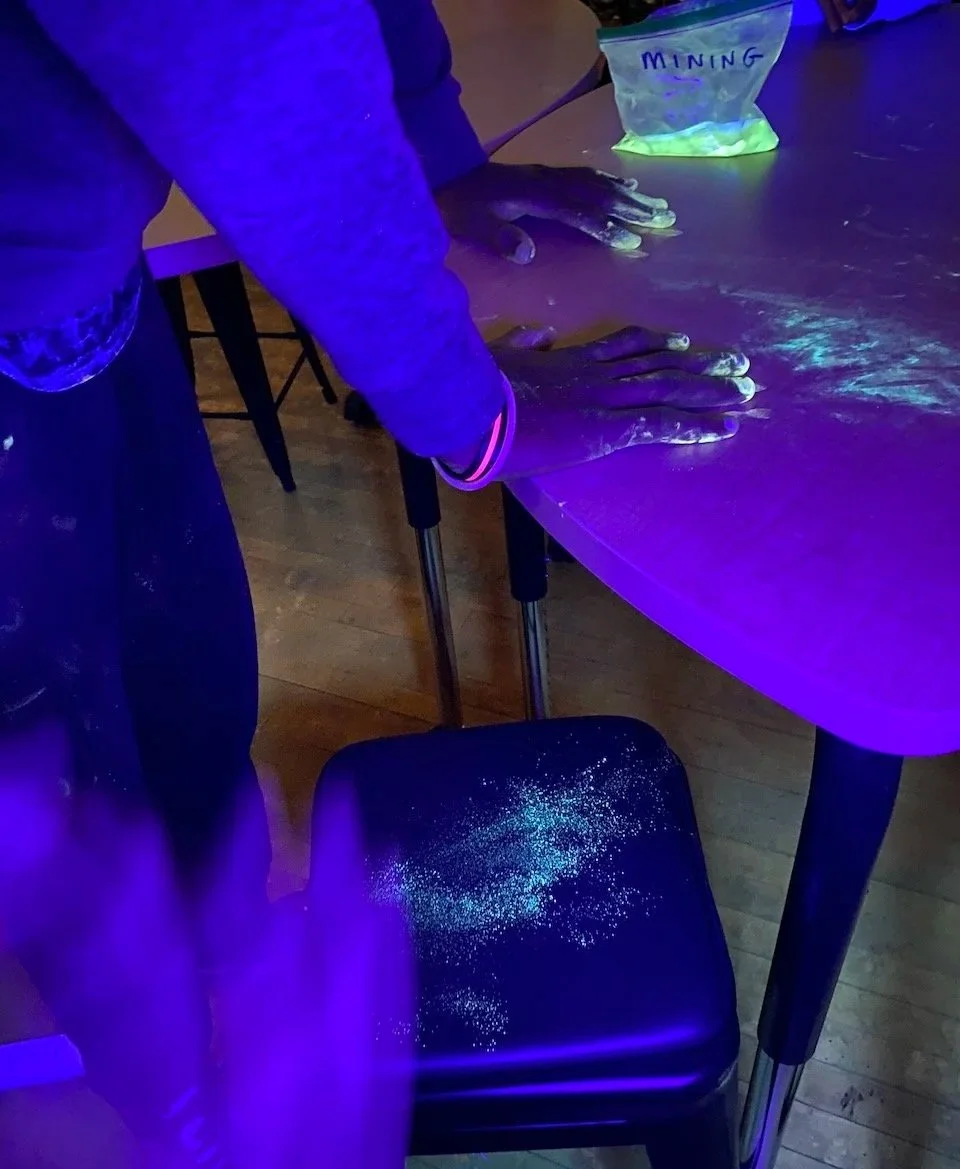
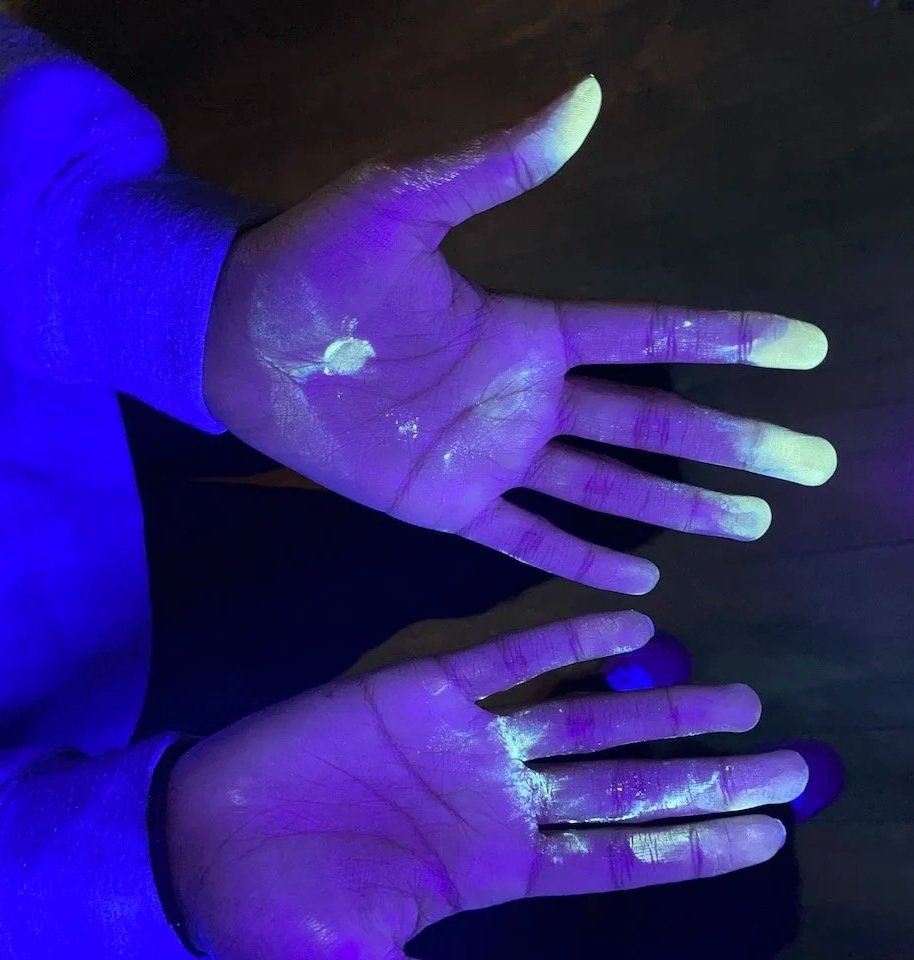
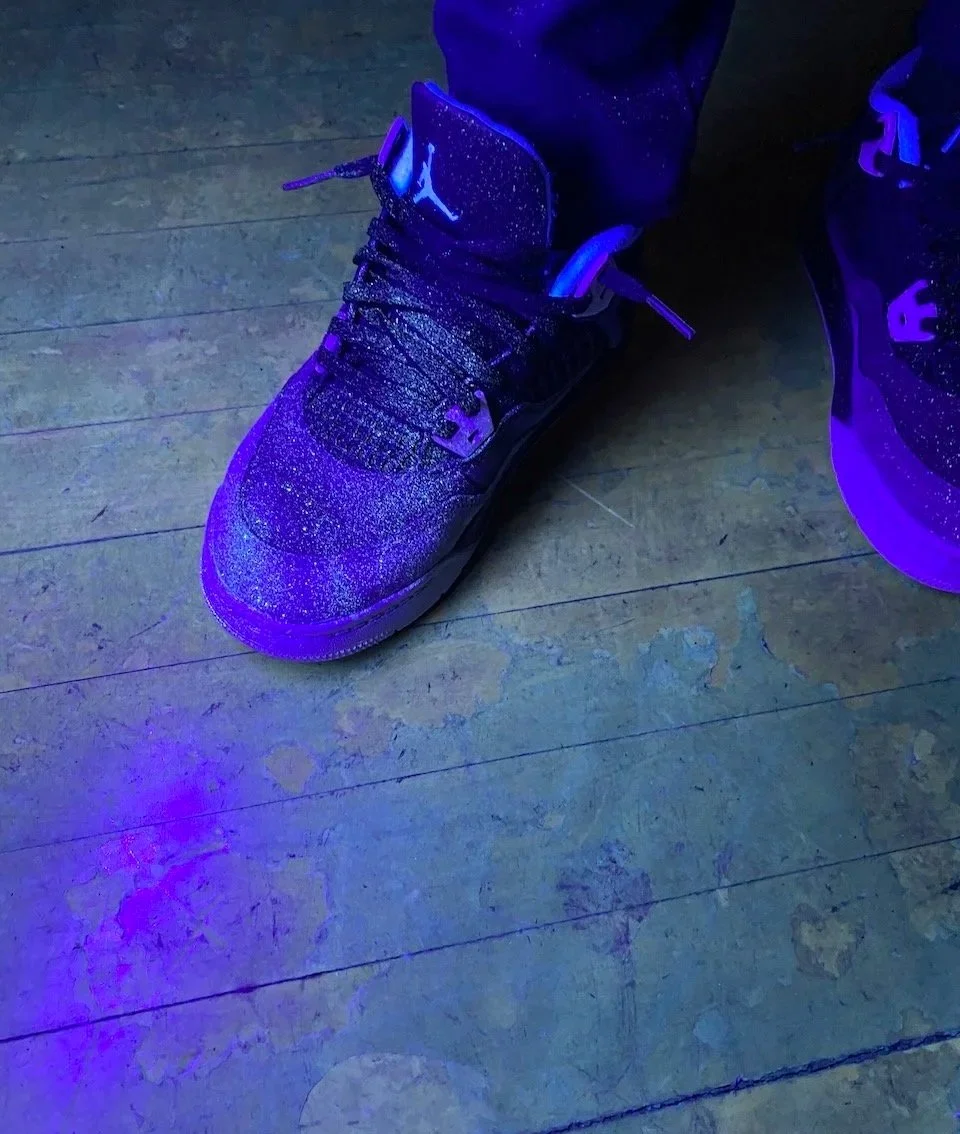
To learn more about this nuclear fuel cycle, stations were set up around the room representing different steps in the cycle for students to learn about each step and its impact on humans and the environment. Each station had a step involving a powder that represented the fuel: uranium. At the end of the activity, the light was switched off, and a UV light was turned on, revealing that the powder was glow-in-the-dark and covered students' clothes, shoes, and even hair. This was meant to represent possible risks of leaks and pollution, not necessarily through explosive accidents, but through daily operations, that are invisible and untraceable to human senses.
Uranium Fuel Cycle Notecather
Uranium Cycle Game Overview
3: Design Your Own Nuclear Fuel Cycle Model
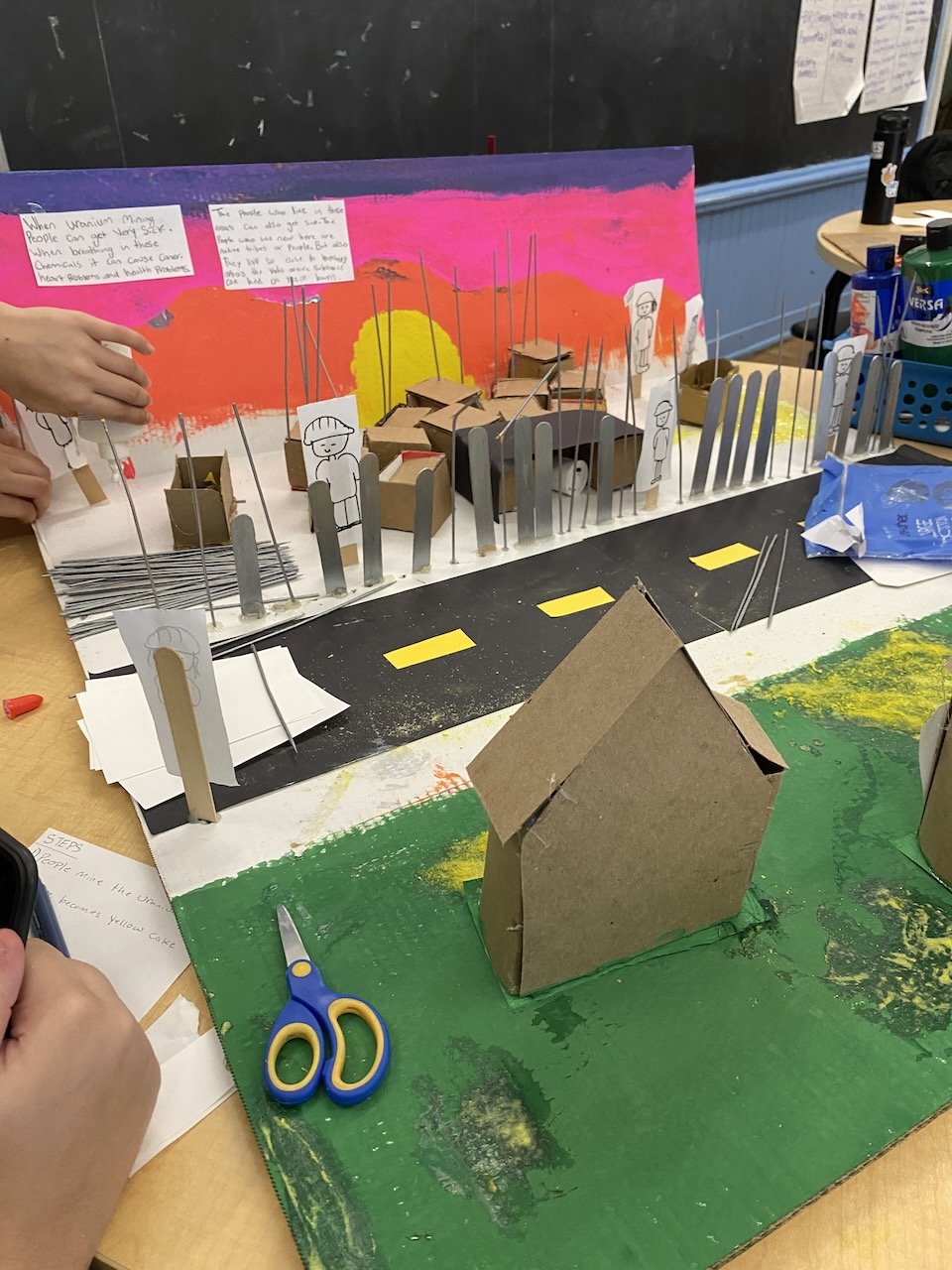
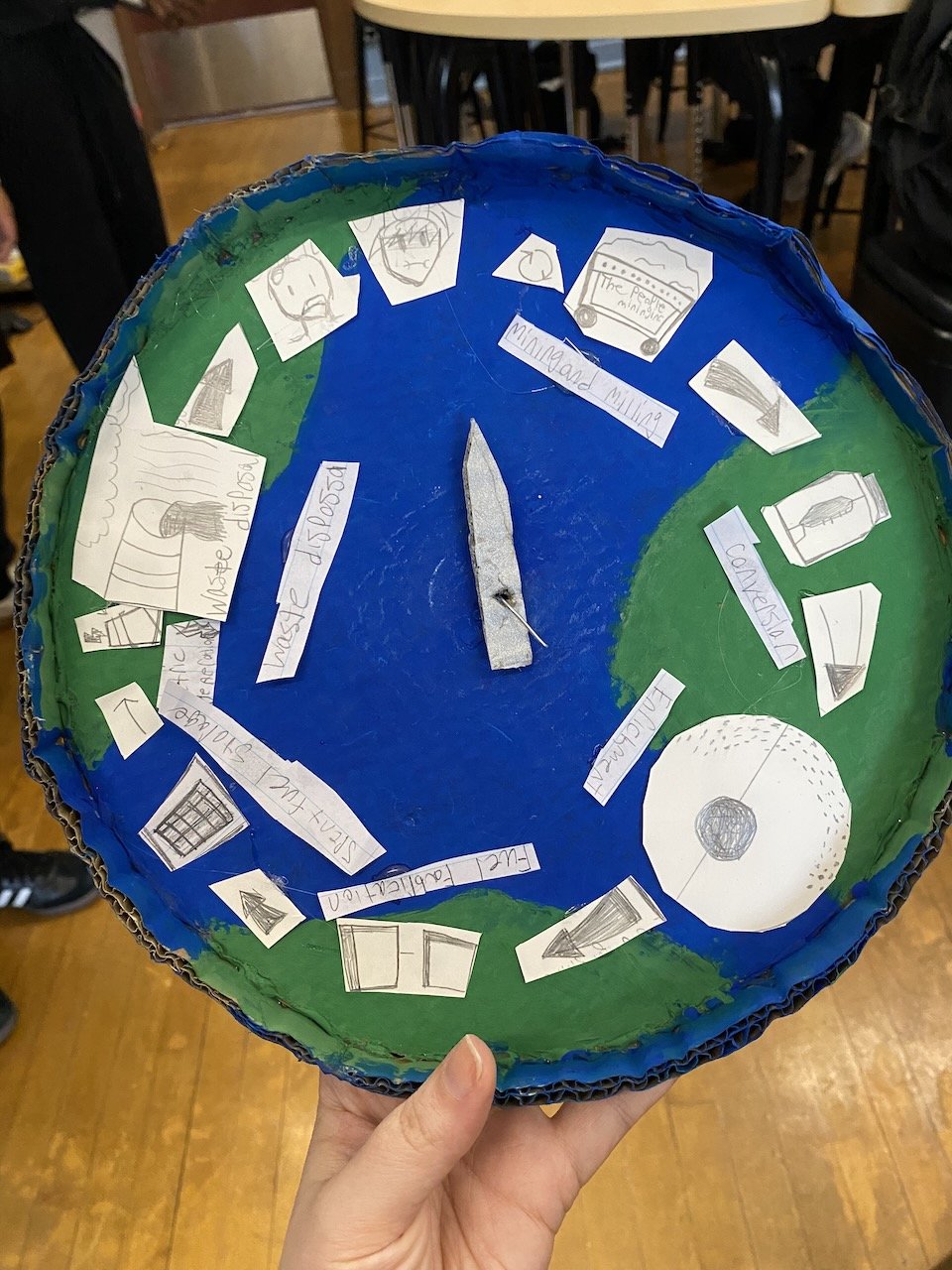
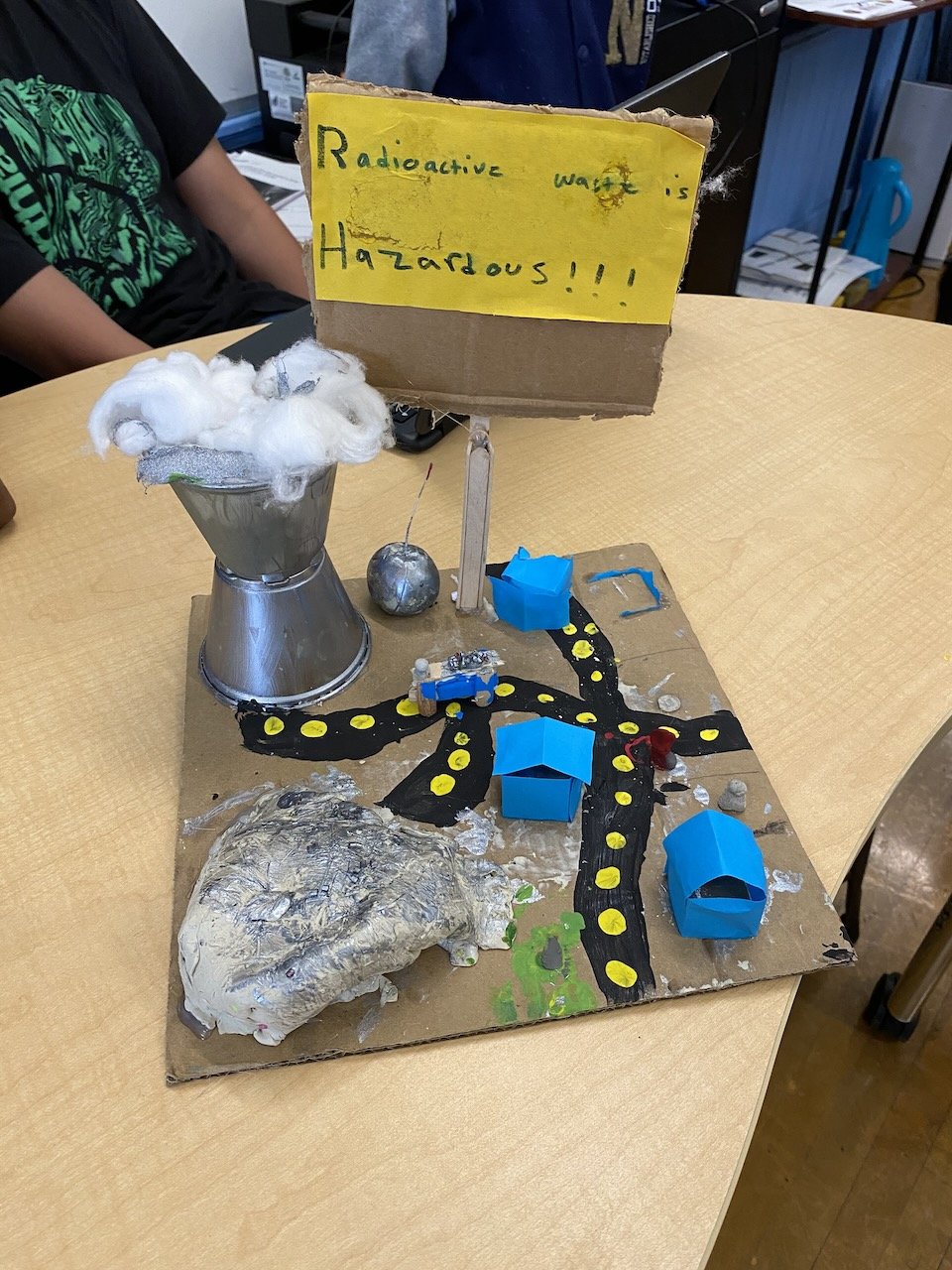
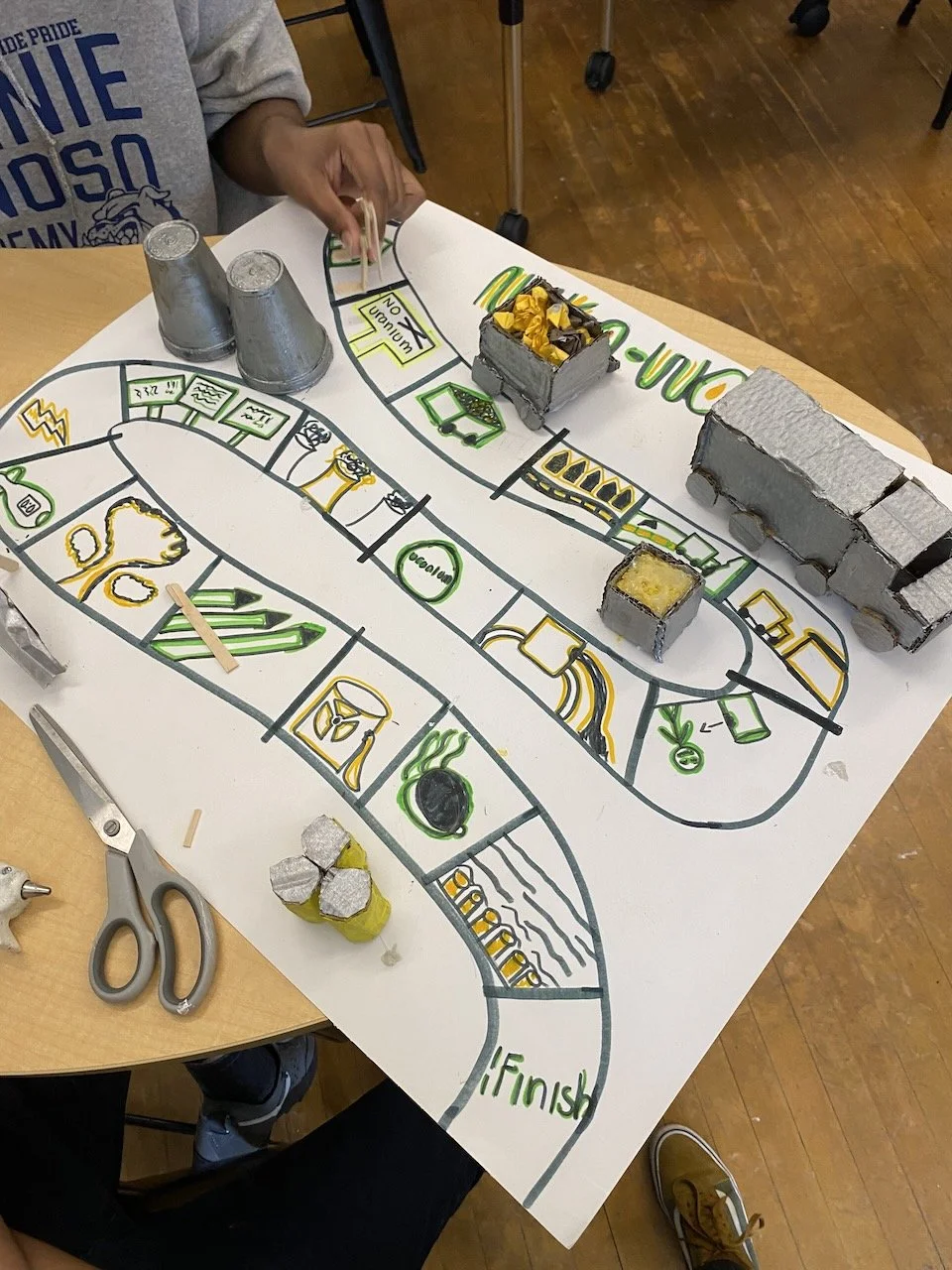
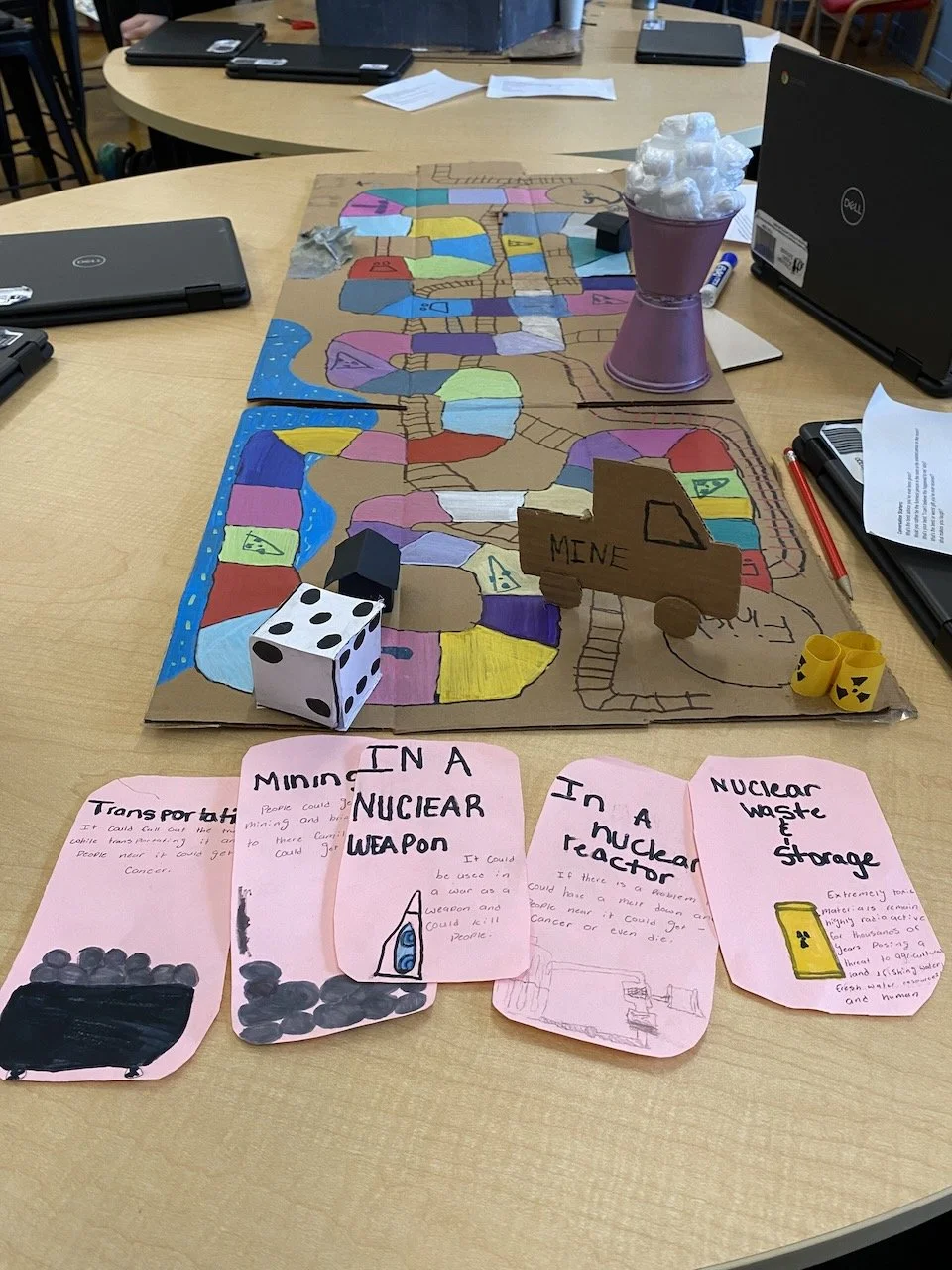
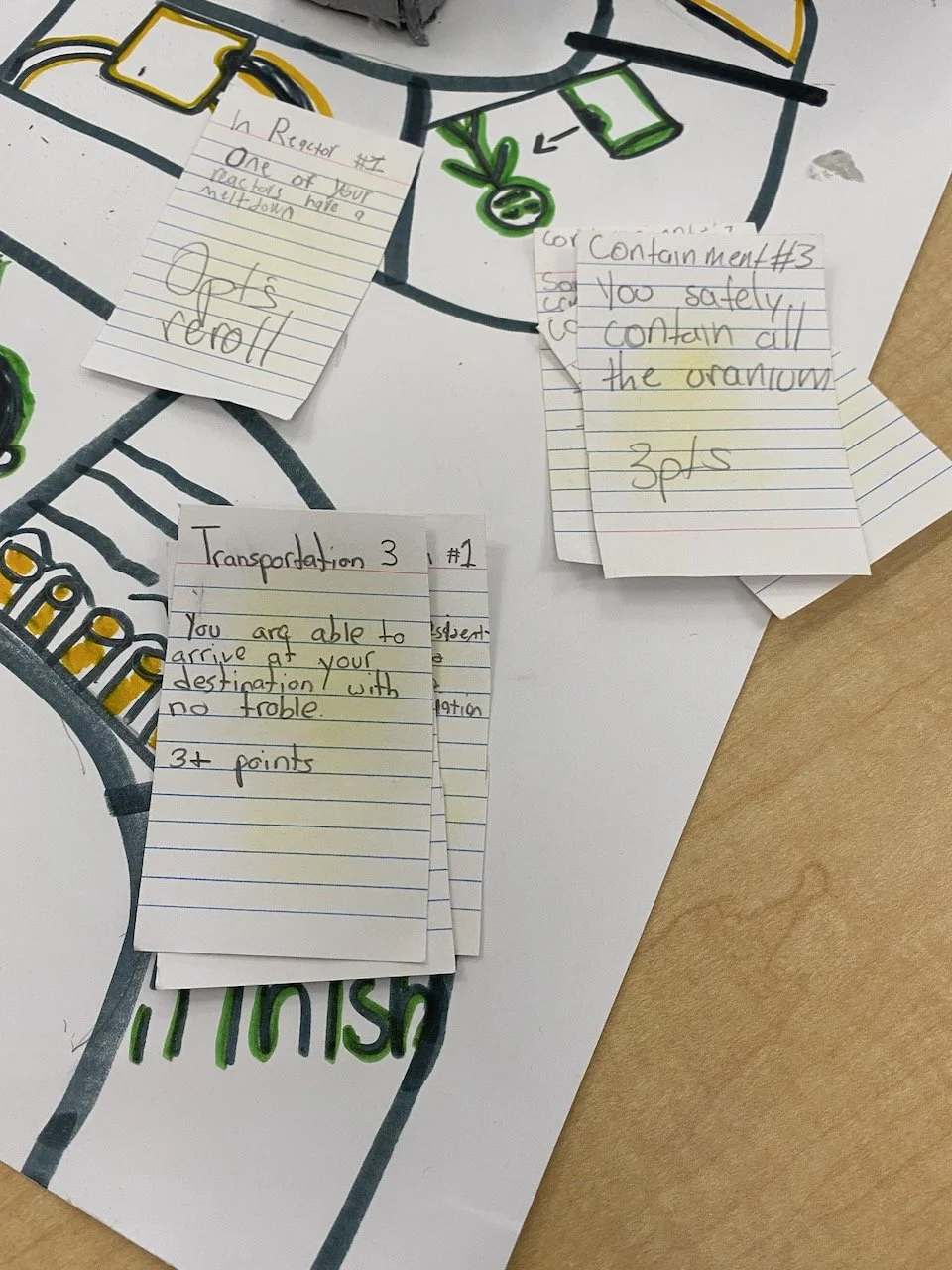
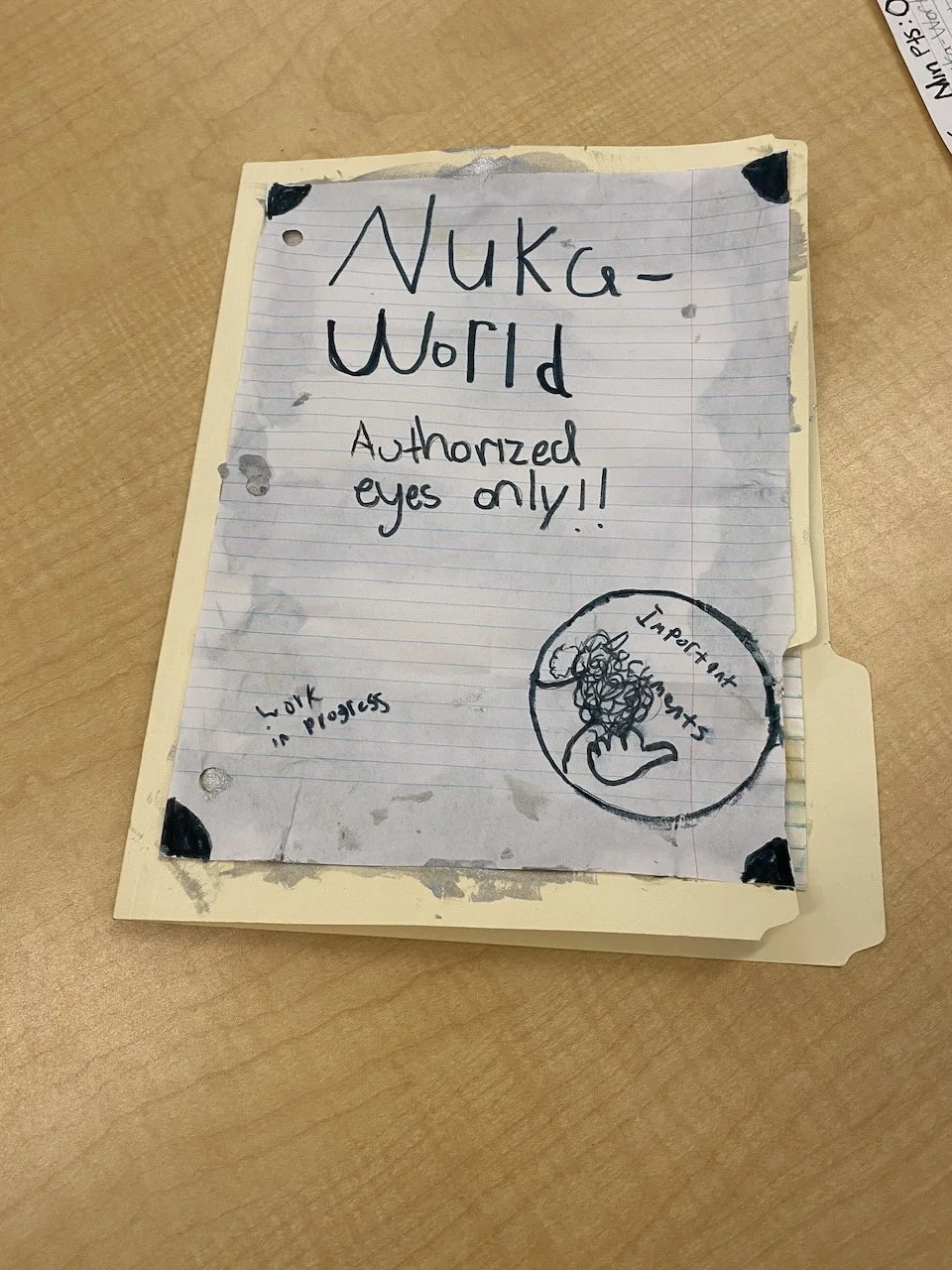
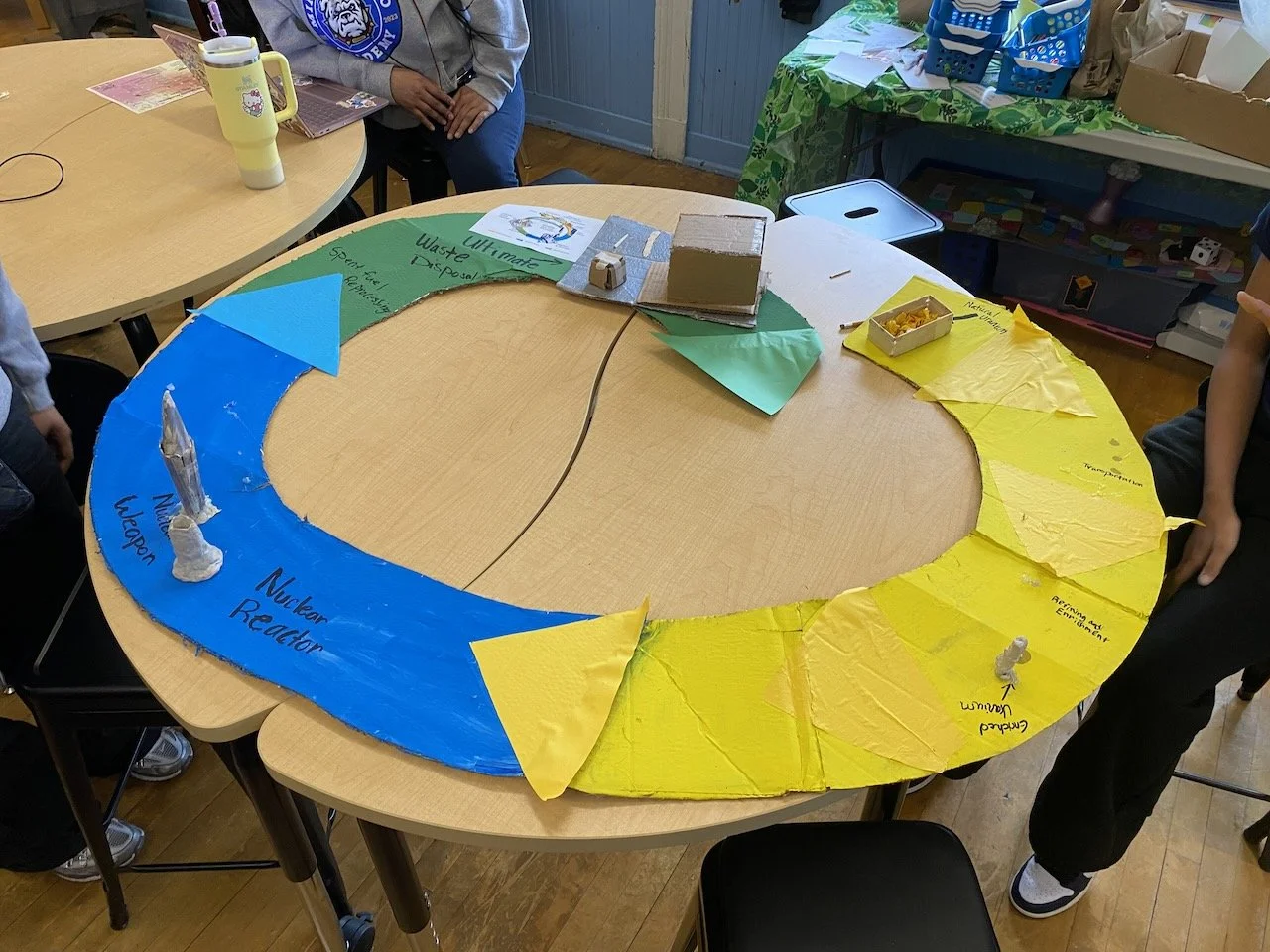
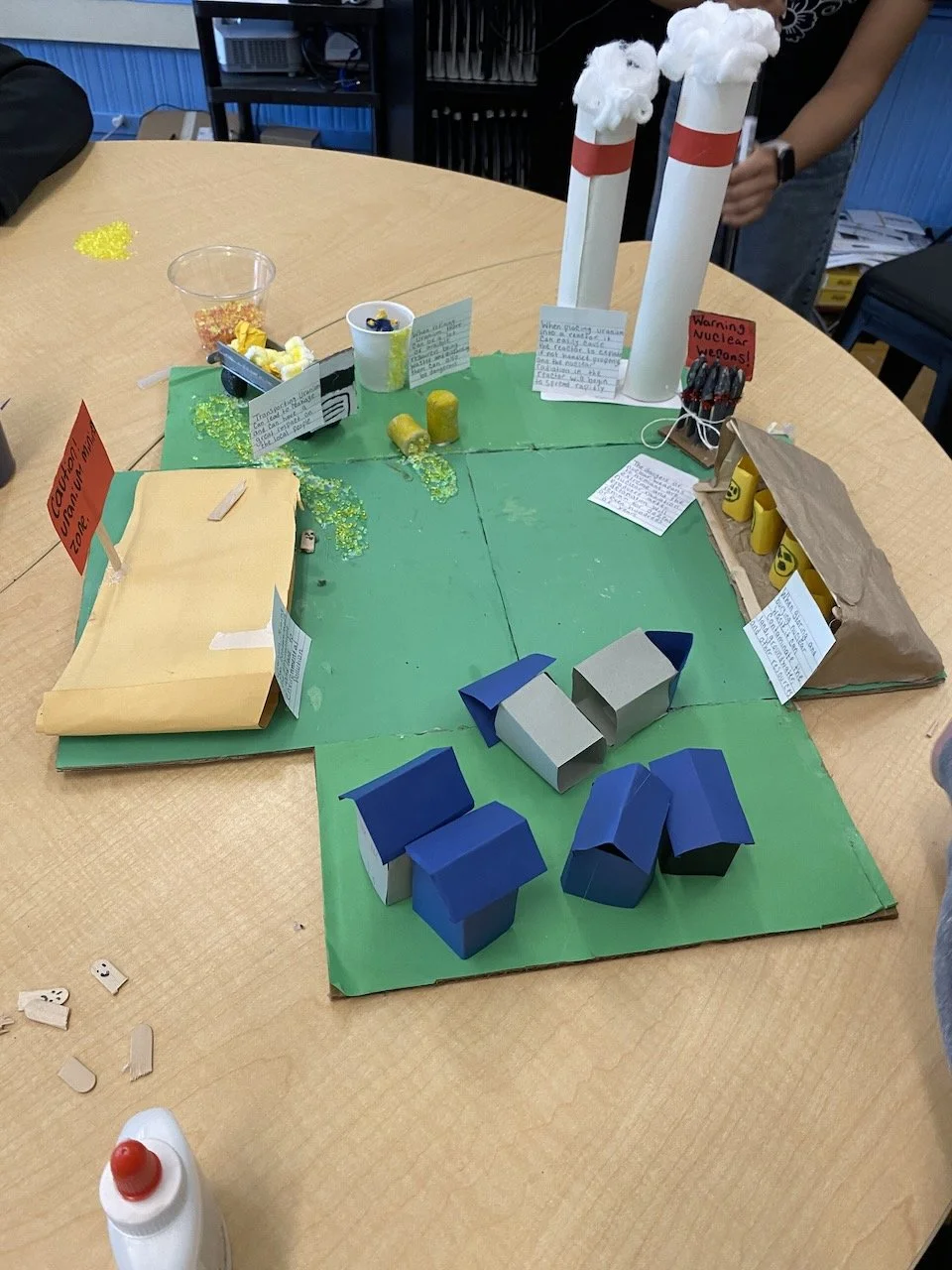
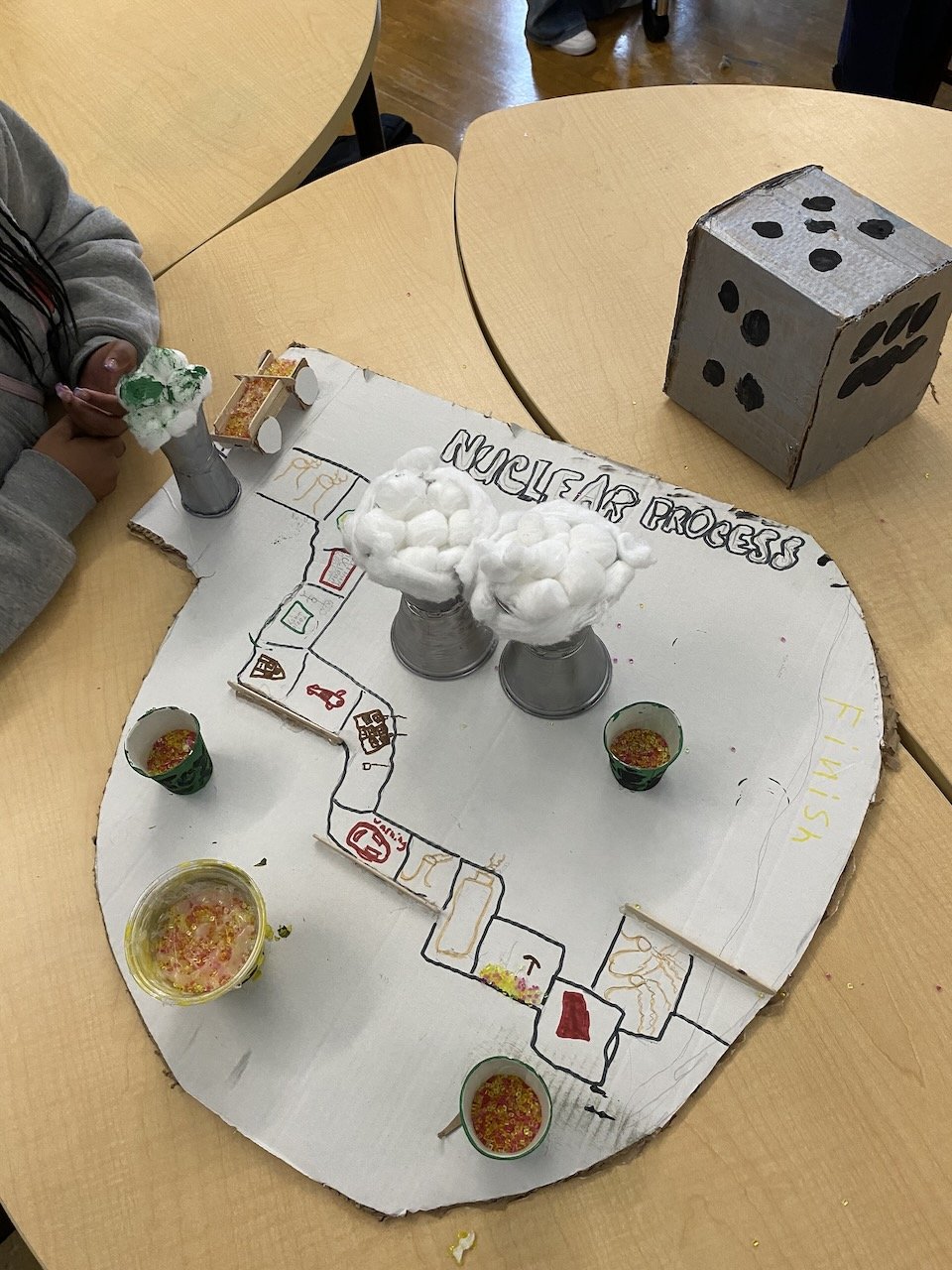
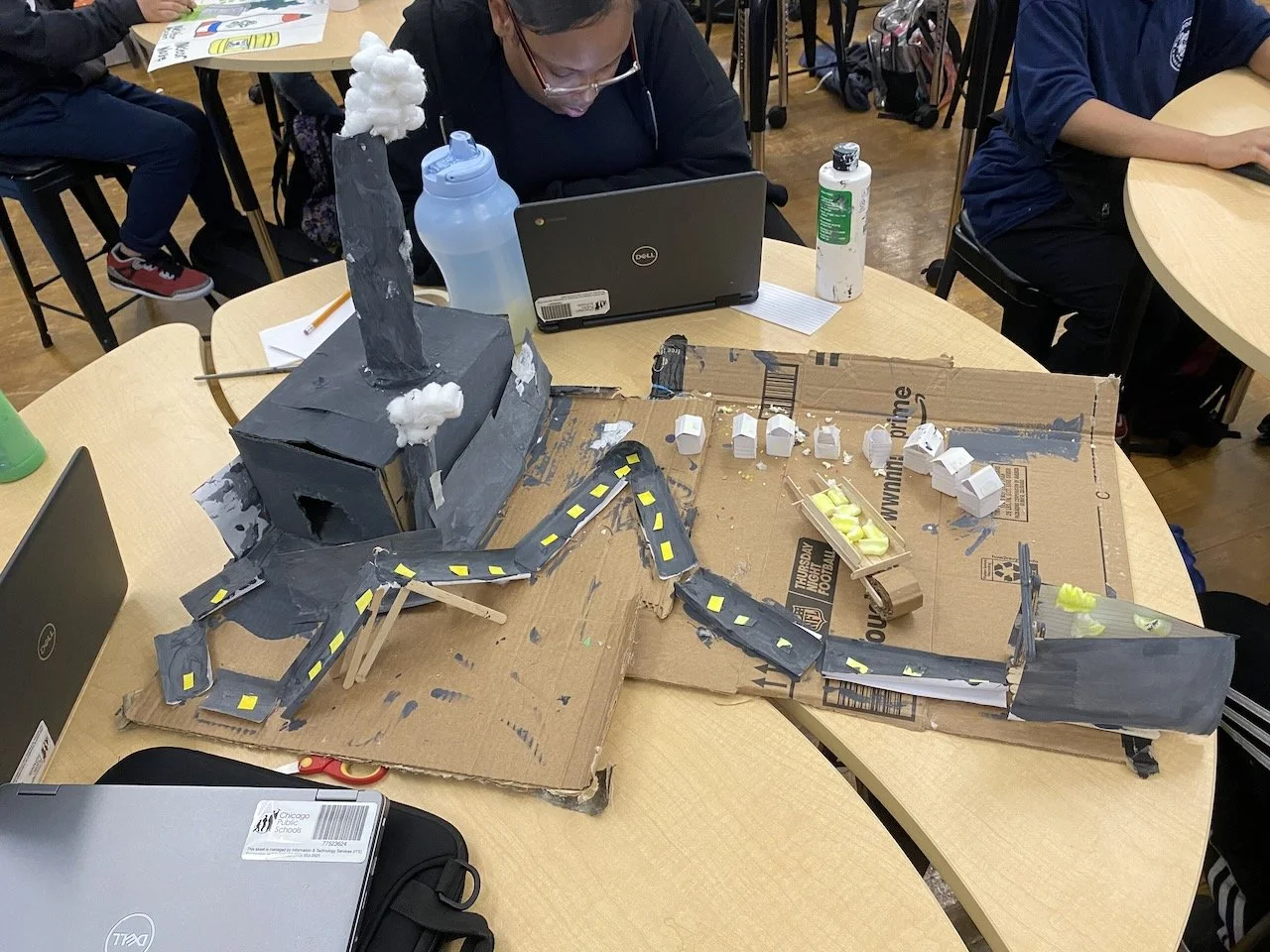
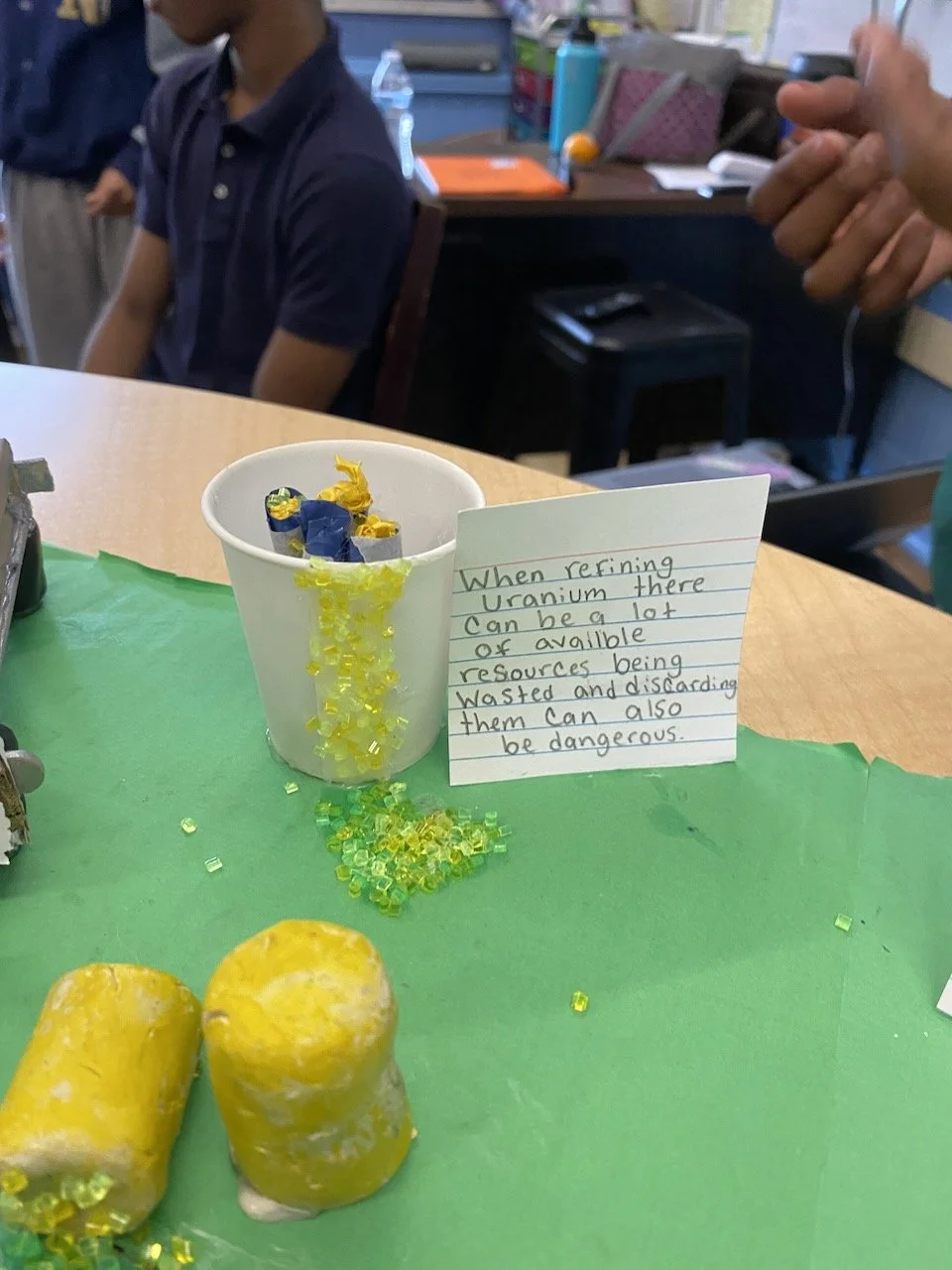
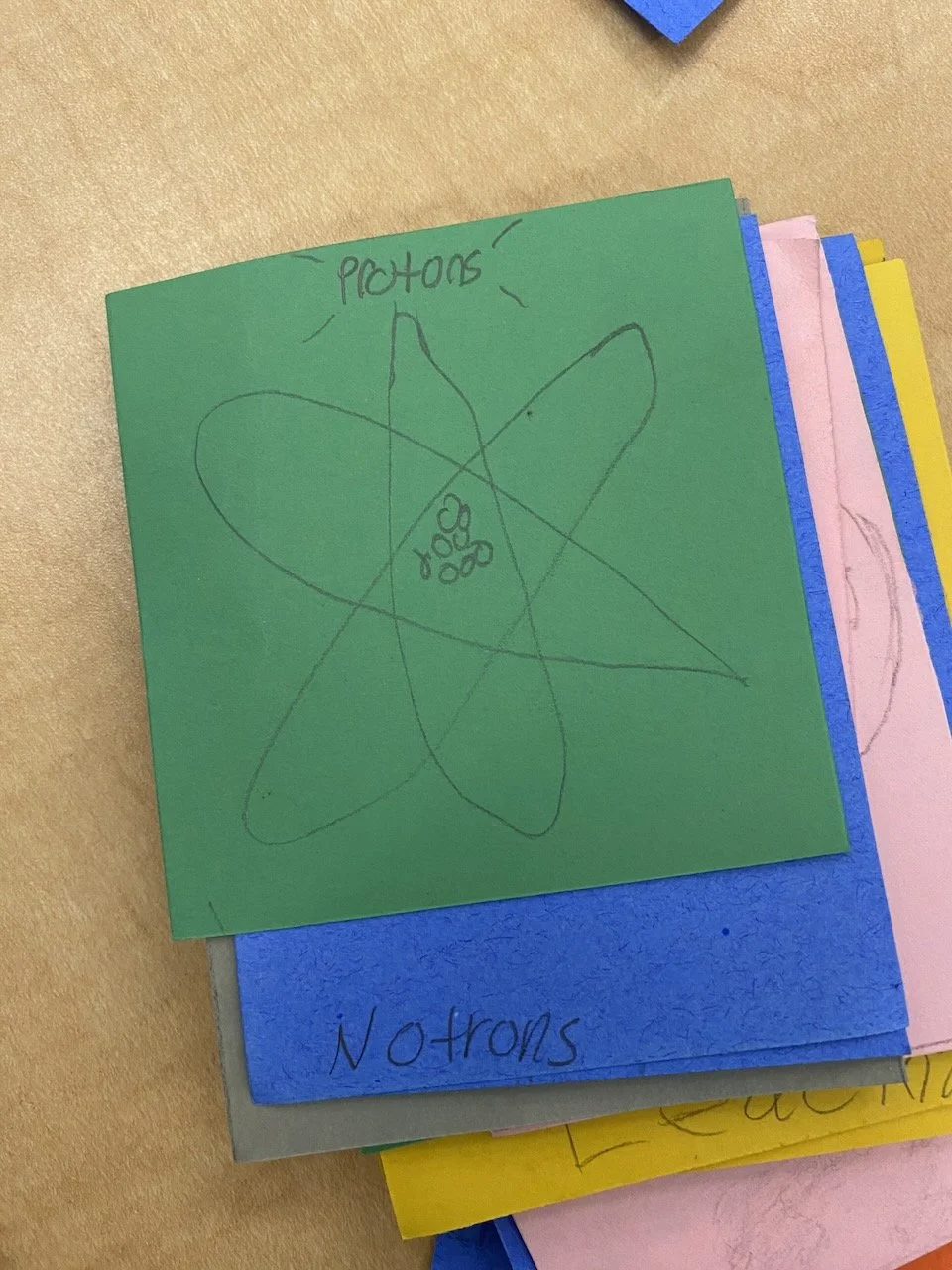
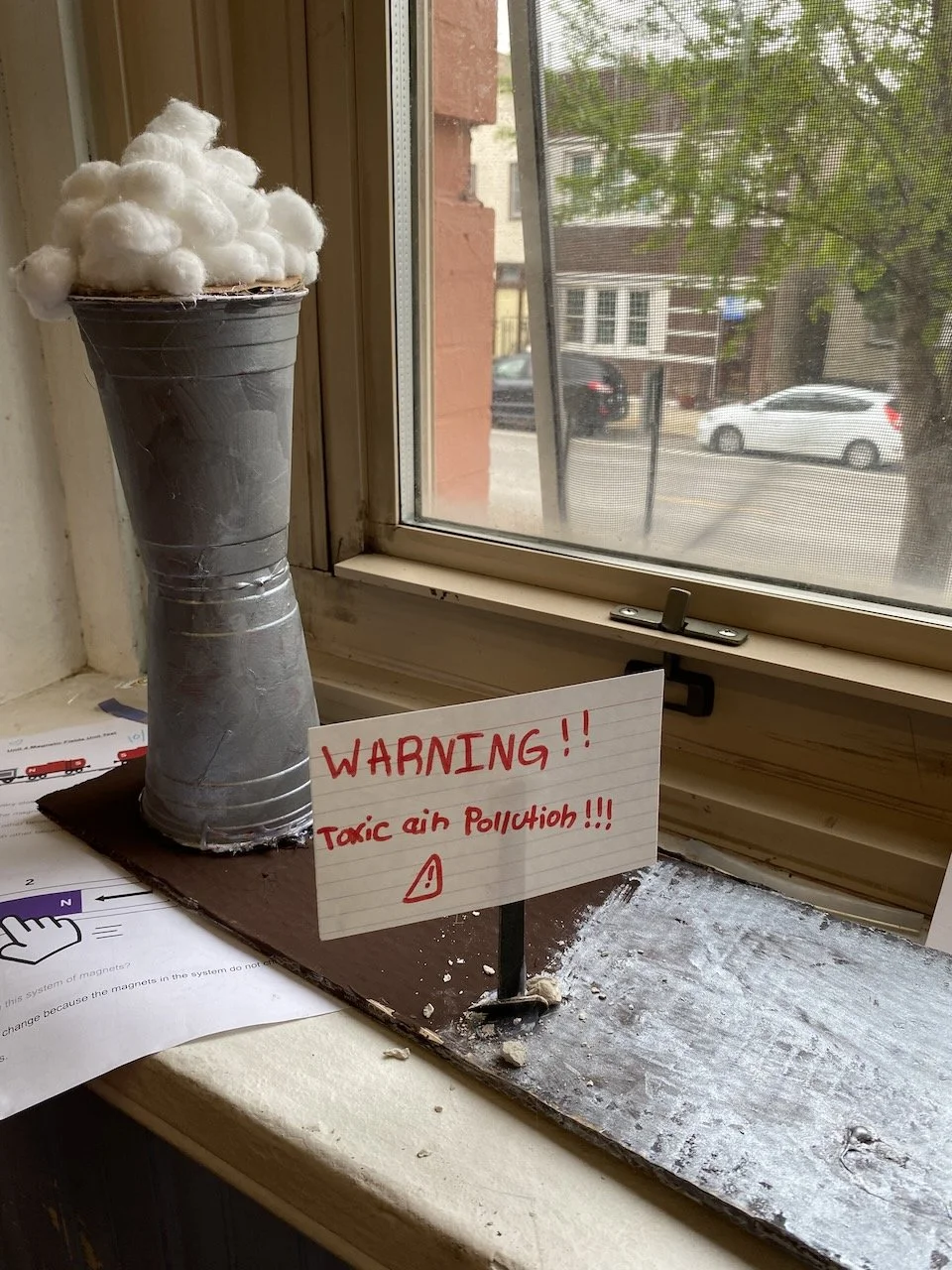
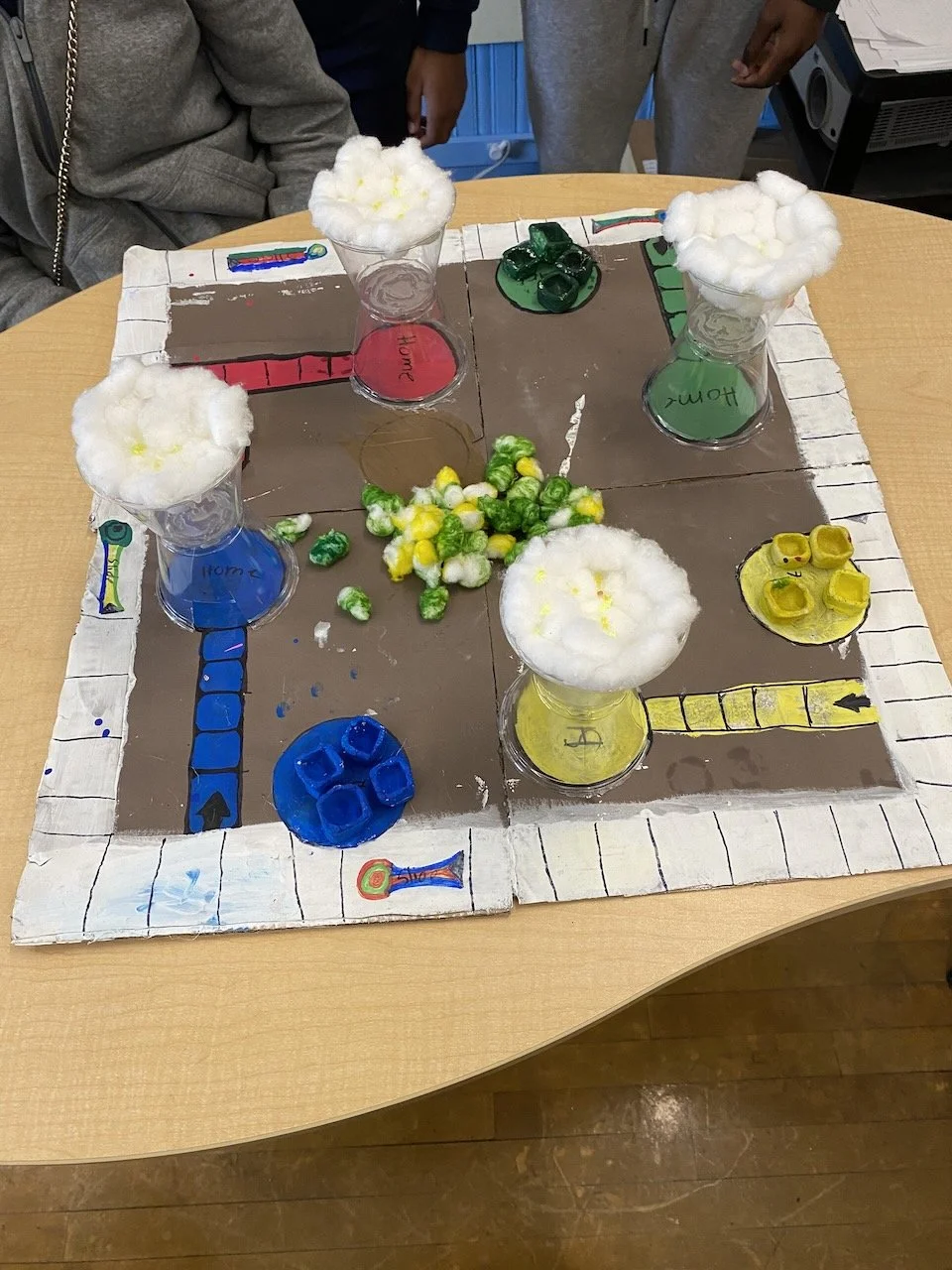
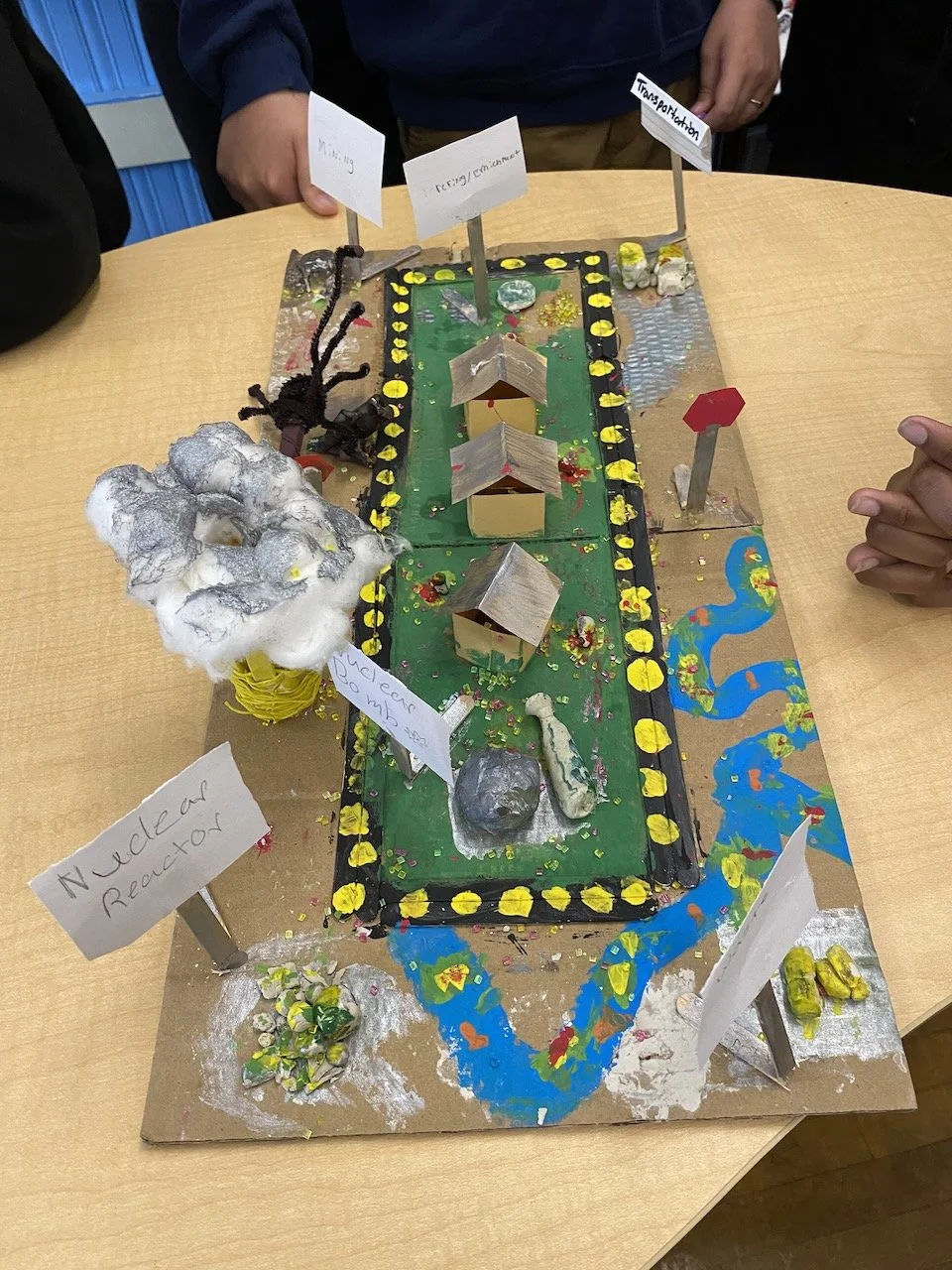
Finally, the students created their own model of the nuclear fuel cycle, either as visual models, written models, or games. In collaboration with art college students at the School of the Art Institute of Chicago (SAIC), students worked on creative projects to express the impact of the nuclear fuel cycle on humans and on the environment.
Design Your Own Nuclear Fuel Cycle Model Worksheet